
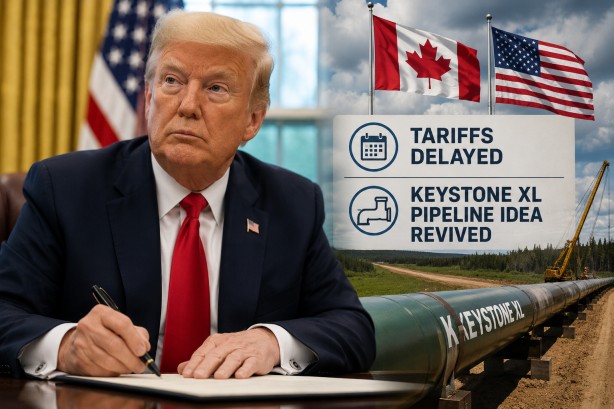
In a recent turn of events, U.S. President Donald Trump has opted to delay the imposition of a 50% tariff on Canadian goods by three days. The decision follows notable advancements in trade negotiations between the United States and Canada. President Trump indicated that a trade agreement is nearing completion, a sentiment echoed by Canadian Prime Minister Mark Carney, who remarked that while “substantial progress” has been made, there is still work to be done to finalize the agreement.
The proposed tariffs, which were set to impact billions of dollars in Canadian exports such as wine and hockey equipment, have been temporarily set aside to allow both nations more time to reach a comprehensive deal. This development offers a momentary reprieve for Canadian businesses, which have expressed concerns about the potential increase in costs and the threat of diminished access to the U.S. market.
A side note to the trade talks is President Trump’s suggestion that the Keystone XL oil pipeline project might be reconsidered. He hinted that the project, which had been stalled since a crucial U.S. permit was rescinded in 2021, could be “awoken from the grave.” However, he did not elaborate on how this might tie into the ongoing trade negotiations. Originally planned to transport oil from Canada’s western regions to U.S. refineries, the Keystone XL project faced significant opposition from environmentalists, landowners, and Indigenous groups, leading to its halt.
This pause in tariff implementation comes amid a backdrop of tension-filled months in U.S.-Canada relations, characterized by repeated threats of tariffs and retaliatory trade actions. Despite these strains, both countries continue to be vital trading partners, engaging in the exchange of hundreds of billions of dollars in goods and services each year.