
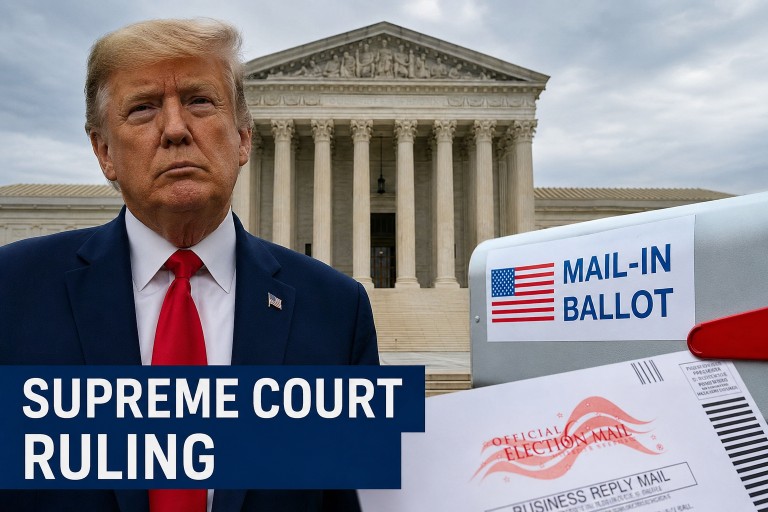
The United States Supreme Court has permitted the Trump administration to proceed with certain aspects of its executive order concerning mail-in voting, following the lifting of an injunction by a lower court. In a 6-3 decision, the justices removed one halt that had been preventing the order’s implementation, though another nationwide injunction remains active. The court clarified that this ruling does not ensure the legality of any future measures that might be enacted under the executive order.
President Trump’s directive mandates the creation of a citizenship list to identify eligible voters and outlines measures related to the distribution of mail-in ballots, as well as the enforcement of federal election regulations. The order has faced opposition from states led by Democrats, who argue that the U.S. Constitution assigns primary authority over election procedures to states and Congress. Critics have also cautioned that implementing changes so close to the November midterm elections could interfere with voting preparations and potentially hinder voter access.
The Supreme Court’s decision enables the administration to advance its policy development while the comprehensive legal dispute concerning the executive order continues to unfold. Despite the ruling, ongoing legal challenges are anticipated, as opponents of the order continue to voice their concerns over its potential implications on electoral processes.
While the court’s decision lifts one obstacle for the Trump administration, the broader legal battle is far from over. Those opposing the executive order remain vigilant, maintaining that the proposed changes could have significant consequences for how elections are conducted and possibly impact voter participation across the nation.
As the administration proceeds with its plans, the legal and political ramifications of the executive order will likely remain a topic of intense debate and scrutiny in the lead-up to the midterm elections, highlighting the ongoing tensions between federal directives and state-controlled electoral processes.