
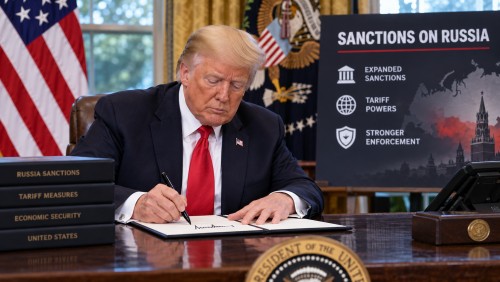
The recent expansion of U.S. sanctions against Russia could significantly impact countries heavily relying on Russian energy exports, including major players like India and China. This development follows President Donald Trump’s signing of a new law that not only broadens existing sanctions on Russia but also extends measures on Iran, potentially reshaping global energy trade dynamics.
Signed into law on September 18, the legislation empowers the U.S. president to impose tariffs of up to 100% on nations that continue purchasing Russian energy. This move is part of a broader strategy to tighten the economic noose around Russia by targeting officials, financial networks, and other entities linked to its military efforts. By curbing Russia’s ability to generate revenue from oil and gas, the U.S. aims to weaken Moscow’s economic base.
The law received bipartisan support in the House of Representatives, reflecting a unified stance on countering Russian aggression. While the legislation provides the president with substantial authority to decide which countries will face these tariffs, it also includes provisions for waiving certain sanctions under specific circumstances. This flexibility indicates a nuanced approach that allows for diplomatic negotiations and strategic implementation.
The White House emphasized that this measure strengthens the U.S.’s ability to respond to Russia’s actions, while also maintaining pressure on Iran through continued sanctions. The administration’s focus is on leveraging economic tools to influence international behavior and uphold geopolitical stability.
As the U.S. administration begins to implement these new powers, the global energy market could see significant shifts. Countries that are major consumers of Russian energy will need to evaluate their trade relationships and consider alternative sources to mitigate potential economic repercussions. The extent of these impacts will depend on how rigorously the new sanctions are enforced and which nations are targeted by the U.S. administration.