
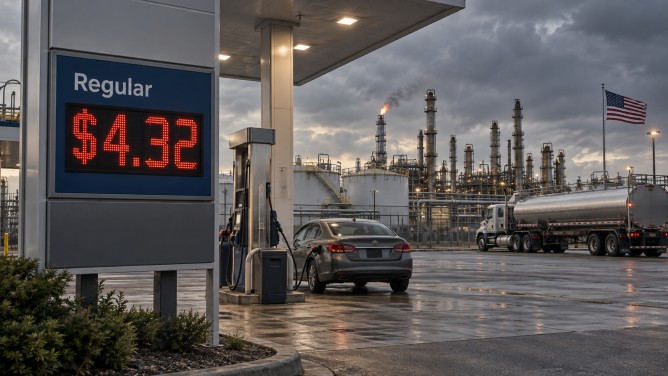
Rising gasoline prices in the United States are beginning to affect both consumers and businesses as the national average hits $4.32 per gallon. This surge in costs, fueled by geopolitical tensions and global oil supply uncertainties, could lead to increased expenses across various sectors, notably transportation and shipping.
Over the past two weeks, gasoline prices have climbed by nearly 25 cents, according to the US Energy Information Administration. This rise represents a significant jump from the approximately $3.18 per gallon average seen around the same period last year. The upward trend is largely driven by disruptions in the global crude oil market, where conflicts involving the Middle East, Iran, and Ukraine have stoked fears over oil supply stability.
Diesel prices are also reaching unprecedented levels, compounding the pressure on the cost of transporting goods. As diesel fuel becomes more expensive, the ripple effect could lead to higher prices for consumer goods due to increased shipping costs. This situation adds a layer of complexity to an economy already grappling with inflationary pressures.
Typically, gasoline prices tend to decrease in the fall as refiners switch to producing the less expensive winter-grade fuel. However, analysts caution that ongoing geopolitical risks may prevent the usual seasonal price drop this year. The US government’s Strategic Petroleum Reserve, which is currently lower than in previous years due to significant withdrawals, may also hinder the country’s ability to mitigate another major disruption in oil supplies.
With the global oil market remaining volatile, energy analysts predict that fuel prices will continue to fluctuate. While a potential seasonal decline in gasoline prices could offer some relief, the persistent supply risks from geopolitical tensions are likely to keep prices elevated for the foreseeable future.