The ongoing tension between the United States and Iran continues to impact international shipping and energy markets, particularly in the critical Strait of Hormuz, where disruptions threaten global economic stability. Iran has signaled a willingness to reopen the waterway, provided its conditions—such as an end to economic sanctions and military pressure—are met. This development follows recent diplomatic engagements at the United Nations General Assembly.
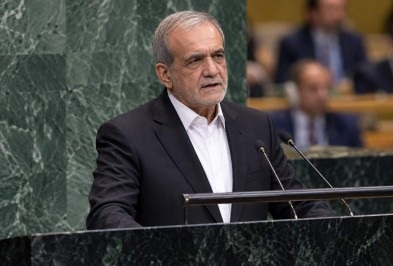
Iranian President Masoud Pezeshkian addressed the assembly, criticizing U.S. President Donald Trump but emphasizing Tehran’s openness to dialogue. Pezeshkian underscored Iran’s preparedness for diplomatic talks, although he rejected negotiations conducted under threats or military duress. His comments came shortly after Trump hinted at potential further actions against Iran while also acknowledging the possibility of renewed discussions.
In a significant move towards diplomacy, Iranian Foreign Minister Abbas Araghchi met with U.S. special envoy Steve Witkoff for three hours, facilitated by Qatari mediation. Their discussions focused on Iran’s stipulations for resolving ongoing conflicts and reducing the economic and military pressures faced by Tehran. Iran’s demands include an end to hostilities, lifting the naval blockade, and releasing Iranian assets.
President Pezeshkian reiterated Iran’s stance on maintaining a peaceful nuclear program, explicitly stating that the country has no ambitions to develop nuclear weapons. He called for regional cooperation on security issues without relying on external powers, a point that aligns with Iran’s broader geopolitical strategy.
The diplomatic overtures at the UN suggest that, despite profound disagreements over issues like sanctions and Iran’s nuclear ambitions, there remains a pathway to dialogue between Washington and Tehran. However, Iran continues to accuse the United States and Israel of aggression, defending its actions as necessary self-defense against increasing economic and military pressures.