
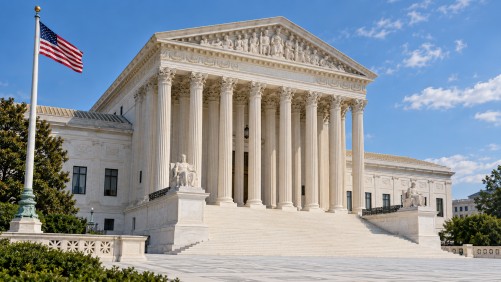
The U.S. Supreme Court has temporarily backed the Trump administration in a political advertising dispute, pausing a lower court’s order ahead of the November midterm elections. On October 8, the justices stayed a directive from the 4th U.S. Circuit Court of Appeals, which had mandated that the Federal Communications Commission (FCC) resolve objections to a new policy within two days.
The policy in question, implemented by the FCC in March, extends the legally required lowest advertising rates to political party advertisements coordinated with candidates, rather than restricting these rates solely to ads paid for directly by candidates. This change was contested by four Democratic candidates in competitive House and Senate races, including Georgia Senator Jon Ossoff, who argued against the FCC’s interpretation and sought judicial intervention before the elections.
The appeals court had criticized the FCC for delaying its decision on the Democrats’ objections, suggesting that such delays could hinder judicial review of the policy before voters head to the polls. The Justice Department, however, argued that the FCC was still in the process of gathering public comments and that postponing a decision during the election season was justified.
Previously, the Supreme Court ruled in September that the appeals court could not block the FCC’s policy before the agency completed its internal review process. The latest order from the Supreme Court temporarily prevents the lower court’s deadline from taking effect while the justices consider the administration’s appeal.
This case could have significant financial implications for congressional campaigns, as political committees associated with the Republican Party have outpaced Democratic party committees in fundraising. Access to lower advertising rates may influence campaign spending in closely contested races.