
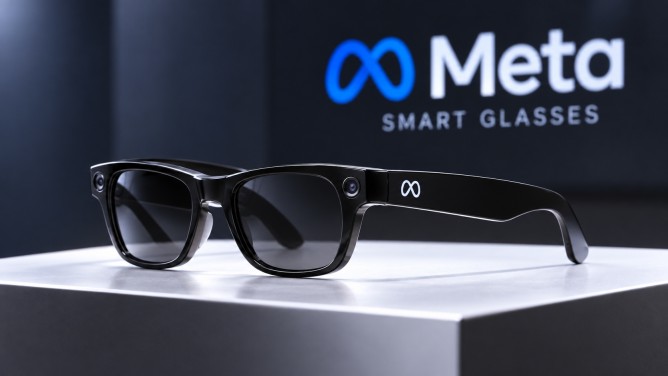
Concerns are mounting among U.S. law enforcement agencies over Meta’s camera-equipped smart glasses, with fears they could be used to covertly record sensitive operations and locations. These glasses, which can mimic the appearance of traditional eyewear brands like Ray-Ban or Oakley, are believed to have the potential to record in restricted areas without drawing attention. An internal warning from the New York Police Department’s counter-terrorism unit highlights the risk of these glasses capturing critical information within detention facilities, such as the layout of cells, camera placements, and patrol patterns. This warning came after online videos emerged showing individuals allegedly recording inside a detention center without detection.
Such concerns are echoed by authorities in Maine and other states, where there is apprehension about the glasses’ AI-enabled features, including facial recognition, which could be used to identify officers and access publicly available information about them. Federal-level restrictions are also in place; for instance, U.S. Immigration and Customs Enforcement has categorized smart glasses as body-worn cameras, prohibiting their use by employees in federal workplaces to prevent accidental capture or transmission of sensitive information.
The potential for smart glasses to be used in pre-criminal reconnaissance is another area of scrutiny for law enforcement. A past alert referenced an attack in New Orleans, suggesting that the assailant may have used smart glasses to survey the location before the incident. Meta, the company behind these glasses, asserts that they feature a white LED light that activates during photo or video recording, which cannot be turned off. Meta also contends that similar recordings could be made using conventional devices like smartphones.
This situation underscores a broader debate regarding AI-driven surveillance technologies, privacy, and the public’s ability to record police activities. Privacy advocates argue that surveillance tools should not be monopolized by authorities, emphasizing that individuals must retain the capability to document official conduct. The discourse surrounding these smart glasses reflects the ongoing tension between technological advancement and privacy rights in the digital age.