
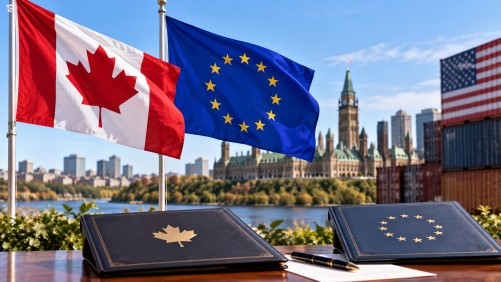
Canada’s strategic decision to enhance its alliance with the European Union (EU) could have significant implications for its economic landscape, as the country navigates ongoing trade tensions with the United States. This move aims to diversify Canada’s international partnerships, potentially increasing economic resilience through expanded collaboration in key areas such as defense, technology, and financial services.
Prime Minister Mark Carney announced this initiative during the Canada Investment Summit in Toronto, emphasizing the need for Canada to fortify its domestic economy while reaching out globally. As part of this effort, discussions with the EU will focus on developing deeper ties beyond the existing Comprehensive Economic and Trade Agreement (CETA), which could expand cooperation into sectors including artificial intelligence and critical minerals.
In a move to attract further investment, Canada revealed nearly C$500 billion in new commitments from pension funds and financial institutions, along with a new Productivity Mega Deduction to expedite cost recovery for businesses across a broader spectrum of investments. The government also plans to invite private investment through long-term concessions for operating the nation’s four largest airports, although ownership of these assets will remain with the federal government.
Canada’s strategic shift towards the EU also aligns with both parties’ interest in enhancing their trade and security relationships. This decision underscores a shared goal of strengthening strategic supply chains and building upon their already robust trade framework.
While Canada is actively pursuing these new partnerships, Carney acknowledged that the United States will continue to play a vital role due to the countries’ strong geographic and economic ties. Nonetheless, defining the scope of this deeper EU partnership remains a priority, as both sides work on solidifying their expanded relationship.