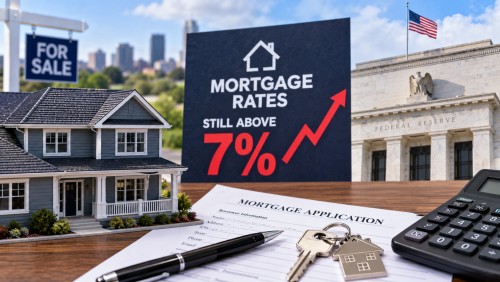
Homebuyers in the United States continue to face elevated borrowing costs as mortgage rates persist above the 7% mark. This financial strain follows the Federal Reserve’s recent decision to raise its benchmark interest-rate range to between 3.75% and 4%, spurred by persistent inflationary pressures that remain above the Fed’s targeted 2%. The impact on potential homeowners is palpable, as these increased rates translate into higher monthly payments.
As of September 17, 2026, the average interest rate for a 30-year fixed mortgage stood at 7.37%, while the 15-year rate averaged 6.62%. This marks a significant rise from March, when the 30-year rate was notably lower at 5.75%. The escalation in rates has consequently altered the financial landscape for many considering homeownership, leading to higher entry costs and more expensive long-term commitments.
While the Federal Reserve’s interest-rate hikes do not directly dictate mortgage rate movements, they are a significant factor. Mortgage rates are also impacted by broader economic conditions, including financial markets, inflation expectations, and investor demand. Despite the increased rates, borrowers may still find opportunities to secure lower rates based on factors such as credit score, down payment size, and lender terms. Additionally, options like adjustable-rate mortgages or paying mortgage points upfront could potentially offer more favorable terms, albeit with additional upfront costs or future rate adjustments.
The refinancing landscape has also been affected by rising rates. The average 30-year refinancing rate has reached 7.41%, with the 15-year rate at 6.75% as of mid-September. For homeowners locked into mortgages with significantly lower rates, refinancing may not present significant financial benefits unless the savings justify the costs involved in the refinancing process.
Looking ahead, the trajectory of mortgage rates will likely hinge on a combination of inflation trends, economic conditions, and the Federal Reserve’s future policy decisions. While there remains uncertainty over whether rates will decrease, prospective buyers and homeowners alike must navigate this complex financial environment carefully, weighing current costs against potential future savings.