
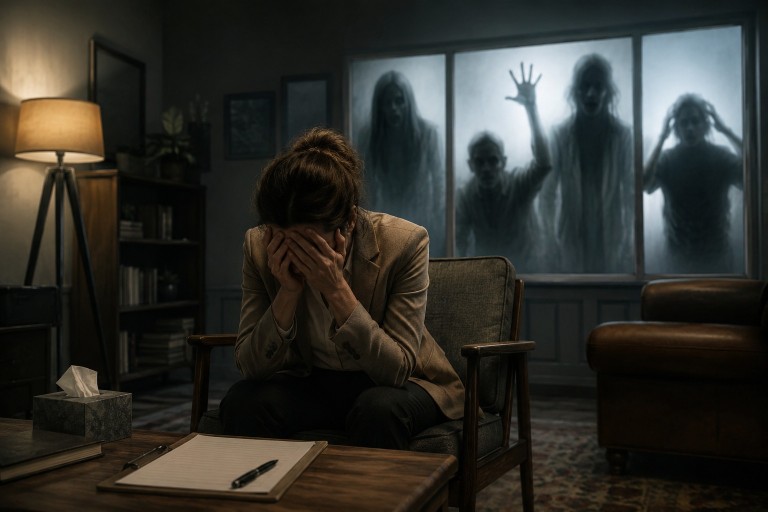
In recent years, horror and psychological films have increasingly depicted therapists not as infallible guides but as individuals grappling with their own emotional challenges. This evolving portrayal mirrors the growing public dialogue about mental health and acknowledges that therapists, too, encounter personal struggles. The trend is evident in films such as “If I Had Legs I’d Kick You,” “Smile,” “Backrooms,” and “A Private Life,” where therapists are placed at the heart of unsettling narratives, confronting trauma, fear, and psychological breakdowns while simultaneously trying to assist others.
Previously often cast in supporting roles as sources of wisdom, therapists in these stories are now central figures, whose emotional resilience is put to the test. This shift in representation coincides with therapy becoming more accepted and widely discussed in mainstream culture. An increasing number of people are seeking mental health support, and social media has played a significant role in normalizing these conversations, encouraging filmmakers to portray therapists as real, relatable individuals rather than idealized professionals.
These films frequently use elements of supernatural or psychological horror to delve into internal emotional conflicts, exploring themes such as anxiety, burnout, and unresolved trauma. By presenting therapists as human and fallible, the stories underscore the immense pressures faced by mental health professionals and challenge traditional, often sanitized portrayals of the profession.
This nuanced depiction of therapists reflects a broader cultural shift towards acknowledging the complexities of mental health, both for those seeking therapy and for those providing it. As more people engage in these crucial conversations, the entertainment industry is responding by offering narratives that resonate with audiences on a deeper, more personal level. Through these films, the humanization of therapists serves not only to entertain but also to foster understanding and empathy towards the multifaceted nature of mental health care.