
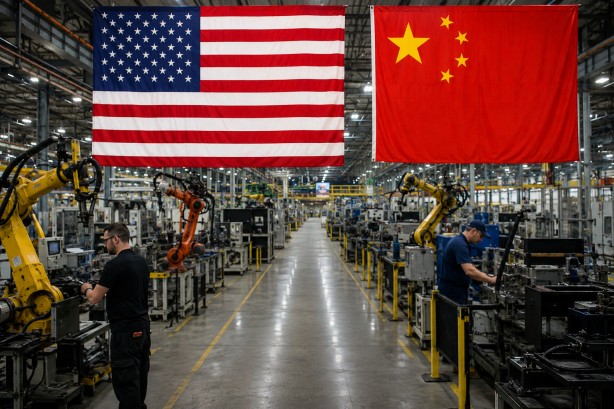
In a significant legislative development, Democratic lawmakers have put forward a proposal to create an Industrial Bank for American Manufacturing, aiming to enhance domestic production and bolster small and medium-sized manufacturers nationwide. The proposal seeks to channel up to 50% of the revenue from tariffs on Chinese imports, with a cap of $15 billion annually, into a specific fund dedicated to this initiative. The bank would offer grants, low-interest loans, and equity investments to businesses endeavoring to expand manufacturing operations within the United States.
Representative Ro Khanna, a key sponsor of the bill, highlighted the proposal as one of the most ambitious industrial development strategies in recent decades. He emphasized that the initiative targets the revitalization of manufacturing in areas adversely affected by factory closures and industrial decline, while simultaneously reducing dependency on imported goods. The overarching aim is to rebuild the nation’s manufacturing capabilities and invigorate regions that have experienced significant economic setbacks.
The proposed legislation outlines that individual loans from the bank would be capped at $500 million. However, any loan exceeding $100 million would require congressional approval. Proponents of the initiative are optimistic that it would stimulate investment in domestic industries, generate job opportunities, and fortify the United States’ manufacturing base, offering a strategic response to ongoing global competition.
This proposal emerges at a time when U.S. manufacturing employment remains below historical peaks, prompting lawmakers to explore innovative avenues for fostering industrial growth. By directing resources towards expanding domestic production, the initiative seeks to address the challenges posed by global market dynamics and reinforce the resilience of American manufacturing sectors.