
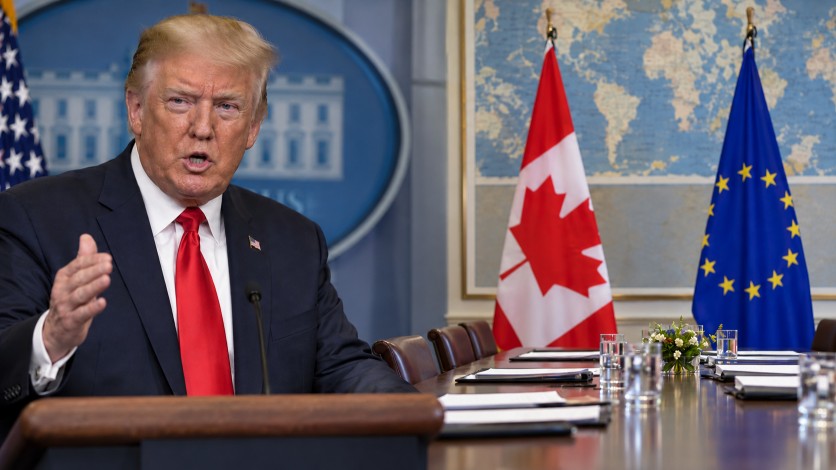
US President Donald Trump has expressed optimism about a quick resolution to the ongoing trade dispute between the United States and Canada, asserting that Ottawa is ready to make concessions. Speaking at a rally in Port Huron, Michigan, Trump defended his administration’s tariffs on Canadian goods as necessary to counter perceived unfair trade practices.
Trump stated, “I had to do it,” referring to the tariffs, and assured the audience that the conflict would be resolved soon, with Canada supposedly willing to compromise. This trade tension, however, has sparked concerns among businesses, especially in the automotive sector, which relies heavily on the seamless cross-border supply chain between the two nations.
Republican Congressman Mike Rogers, who is campaigning in Michigan, expressed mixed feelings about the tariffs. While he appreciated the potential for increased manufacturing investments in the state, he also acknowledged the worries about the tariffs’ impact on the automobile industry.
Amid these tensions, Canada is looking to strengthen its economic and strategic partnerships with the European Union. Canadian Prime Minister Mark Carney, alongside European leaders, is exploring enhanced cooperation in areas like defense, artificial intelligence, and critical minerals, aiming to broaden economic opportunities and lessen Canada’s reliance on the US market.
The idea of deeper Canada-EU integration has gained attention, with discussions on expanding cooperation in education, satellite navigation, and European security initiatives. However, the specifics of any potential associate membership remain unclear. Trump has criticized this potential closer institutional linkage between Canada and the EU, labeling it a hostile move, while the proposal has spurred debate over trade, sovereignty, and economic integration within Canada and Europe.
Canada and the EU already have a trade relationship under the Comprehensive Economic and Trade Agreement (CETA), which was signed in 2016. While CETA has eliminated tariffs on most goods, some aspects of the agreement are still not fully implemented. As negotiations continue, Canada’s efforts to diversify its international partnerships could reshape its economic relations, even as Washington’s tariff policy remains a focal issue for businesses and political leaders on both sides of the border.