
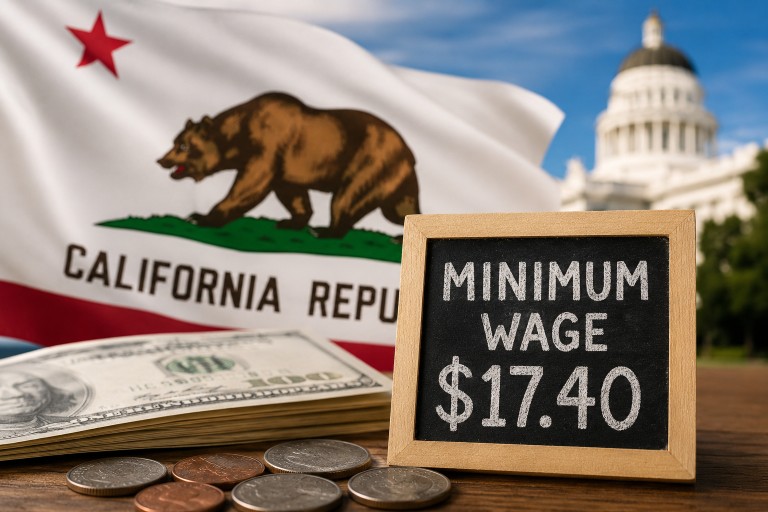
California is set to implement a significant increase in its statewide minimum wage, raising it to $17.40 per hour starting January 1. This adjustment will make California’s minimum wage the highest of any state in the nation, a move aimed at addressing the economic challenges posed by the state’s high cost of living. Governor Gavin Newsom emphasized that this wage hike is part of a broader strategy to support the financial well-being of families across the state.
During the announcement, Governor Newsom took the opportunity to criticize the federal government, particularly the Trump administration and Republican lawmakers, for their resistance to raising the federal minimum wage, which has stagnated at $7.25 per hour since 2009. He highlighted California’s decision to diverge from this approach, committing instead to policies that prioritize wage growth for working families.
Despite the upcoming increase, the issue of affordability continues to loom large for many residents. A report incorporating estimates from the Massachusetts Institute of Technology (MIT) indicates that two working adults with two children in California would each need to earn approximately $36.38 per hour to meet basic living expenses. This figure underscores the challenges that many families still face, even with the increased minimum wage.
The wage adjustment reflects California’s ongoing efforts to address economic disparities and improve living standards for its workforce. By boosting the minimum wage, the state aims to provide more substantial support to its residents, particularly those struggling to make ends meet in an environment known for its high costs.
As California leads the way with the highest statewide minimum wage, the development marks a critical step in the broader conversation about wage standards and economic policy in the United States. The state’s commitment to raising wages serves as a potential catalyst for other states to consider similar measures that align with the needs of their working populations.