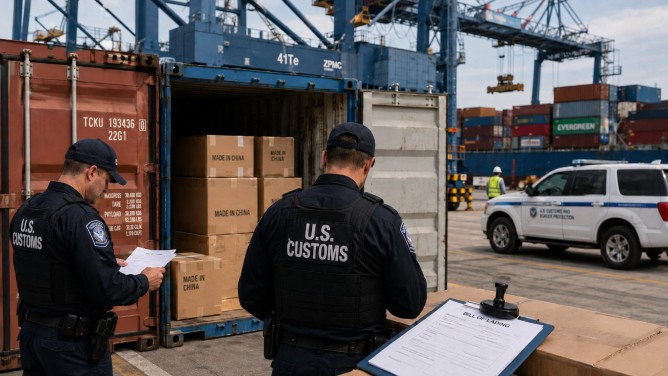
The United States has brought forth allegations against 38 countries and the European Union, accusing them of participating in a “shadow transshipment network.” This network is purportedly facilitating the entry of Chinese goods, which are subject to substantial U.S. tariffs, into the American market via third-party nations. The report, titled “The Great Transshipment Scam,” suggests that this potentially illegal practice could represent approximately $60 billion in goods, leading to significant losses in U.S. tariff revenue.
The nations and territories implicated in these allegations include a diverse array of countries such as India, Canada, the European Union, Israel, Japan, Mexico, South Korea, Taiwan, Brazil, Indonesia, Malaysia, Thailand, Turkey, Vietnam, along with Argentina, Azerbaijan, Bangladesh, Cambodia, Chile, Colombia, Costa Rica, the Dominican Republic, Georgia, Jordan, Kazakhstan, Kenya, Laos, Morocco, Myanmar, Oman, Panama, Peru, the Philippines, Singapore, Sri Lanka, Switzerland, the UAE, and Uzbekistan. According to the report, in 2025, an estimated $67 billion worth of goods destined for the U.S. were allegedly rerouted from China through significant transshipment hubs like Mexico, India, and Vietnam, potentially resulting in around $28 billion in lost tariff revenue for the United States.
A particular focus of the report is the Pune-Gujarat-Chennai corridor in India, where it is claimed that Chinese shipments, particularly of products like electric pumps and compressors, have not only benefitted local businesses but also increased competitive pressure on U.S. manufacturers. This corridor reportedly serves as a crucial link for the transshipped goods, further complicating the tariff landscape and affecting American business interests.
In response to these findings, the United States is considering a series of measures aimed at curbing this alleged tariff evasion. Proposed actions include stricter inspections and interdiction efforts, additional tariffs, and the imposition of sanctions. Furthermore, the U.S. may contemplate restricting market access for those countries that are found to be facilitating the circumvention of tariffs. These steps reflect the seriousness with which the U.S. is addressing what it perceives as a significant economic challenge posed by the transshipment network.