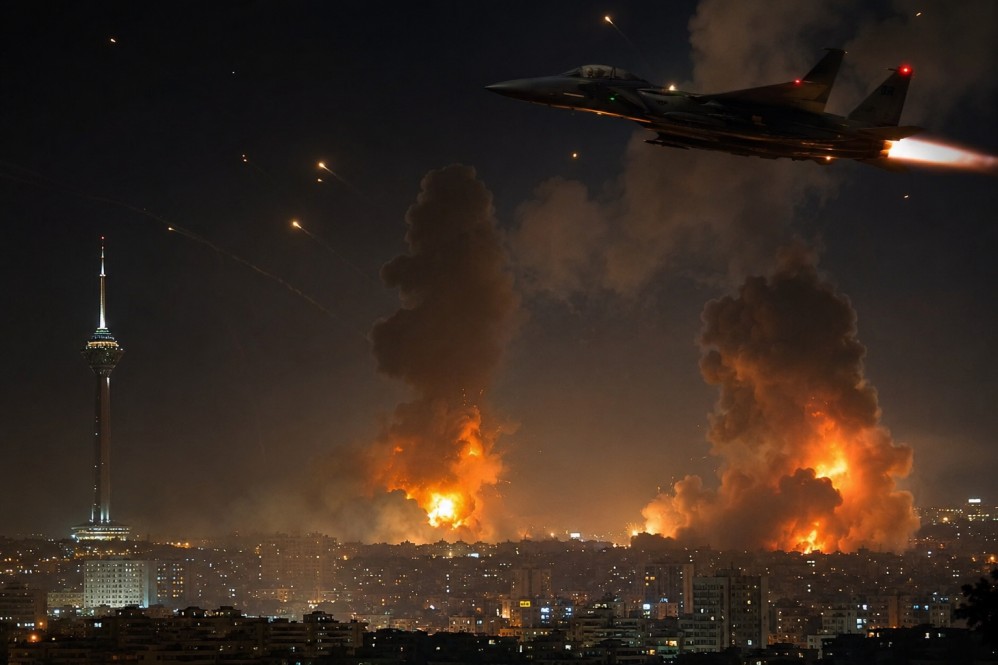
The United States has launched airstrikes on Iran for the third consecutive night, as President Donald Trump reveals a strategy to impose a maritime blockade on the nation. This plan also includes the introduction of a 20% tariff on cargo traversing the Strait of Hormuz under the jurisdiction of US-controlled security. This strategic move aims to curb Iran’s military strength and deter any threats to commercial shipping and civilians in this crucial maritime corridor, according to the US Central Command. President Trump asserted that the military campaign against Iran would persist, emphasizing the US’s commitment to maintaining security in the strait.
This development comes in the wake of reports that two oil tankers from the United Arab Emirates were hit by Iranian cruise missiles in the waters of Oman. The attack resulted in the death of one Indian crew member and injuries to several others. As a consequence of the escalating tensions, Brent crude oil prices have surged by nearly 8%, highlighting the global anxiety over energy supply stability.
Iran has strongly criticized the proposed blockade, accusing the United States of jeopardizing international energy security. Tehran has issued a warning, stating that any efforts to restrict its maritime access will be met with a robust response. Meanwhile, international maritime authorities have pointed out that imposing mandatory transit fees in international waterways lacks legal justification under current international law.
The intensifying military confrontation has sparked concerns about a broader regional conflict. Ongoing attacks have disrupted shipping routes, driven up oil prices, and injected a degree of uncertainty into the global economy. These developments underscore the fragile balance of geopolitical tensions in the region and their far-reaching implications on international energy security and economic stability.