
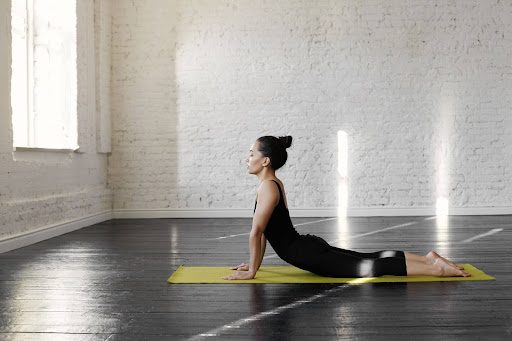
Pregnancy and childbirth create unique challenges for back health that require specific attention during postpartum recovery. A yoga instructor provides comprehensive guidance for rebuilding core and spine strength after birth, demonstrating that systematic progression enables recovery while preventing long-term problems.
This expert’s teaching begins with understanding pregnancy and birth’s specific effects on the back and core. During pregnancy, hormonal changes increase ligament laxity throughout the body including the spine, reducing structural stability. The growing uterus creates progressive forward weight distribution requiring increased lumbar curve and back muscle engagement. Abdominal muscles stretch substantially, particularly the rectus abdominis and linea alba connective tissue. During vaginal birth, additional pelvic floor and abdominal strain occurs. These changes leave new mothers with reduced core stability, altered postural patterns, and vulnerability to injury precisely when new physical demands from infant care emerge.
The instructor emphasizes that recovery requires patience respecting healing timelines. The immediate postpartum period (first 6 weeks) involves substantial physiological changes as the body recovers from birth and begins adapting to post-pregnancy state. Hormonal effects on ligament laxity persist for months, particularly while breastfeeding. Abdominal muscles and connective tissue require weeks to months for substantial recovery. Attempting aggressive exercise during early postpartum periods risks injury to structures not yet prepared for loading while potentially interfering with healing processes.
The instructor provides progressive stages for postpartum back recovery. Stage 1 (Weeks 0-2) involves gentle movement only. Breathing exercises emphasizing deep diaphragmatic breathing and gentle pelvic floor engagement prove appropriate. Gentle walking begins as soon as comfortable, gradually increasing duration. The five-step standing protocol can be implemented in very gentle form: minimal weight shifting, gentle chest lift, extremely minimal pelvic positioning without forcing tucking that might stress healing tissues. The emphasis lies on maintaining basic awareness and gentle movement rather than challenging muscles not yet ready for loading.
Stage 2 (Weeks 2-6) gradually introduces more substantial activity. Walking duration and pace can increase progressively based on symptom response. Modified wall exercises can begin: standing at arm’s distance, hands on wall at shoulder height rather than overhead, leaning forward gently with minimal loading, holding 15-30 seconds. Gentle core engagement exercises emphasizing deep stabilizers rather than superficial muscles prove appropriate—diaphragmatic breathing with conscious pelvic floor engagement, gentle pelvic tilts in supine position, supported quadruped positions with gentle limb movements. These build foundational stability without excessive demand on healing tissues.
Stage 3 (Weeks 6-12) enables more significant progression, typically beginning after medical clearance at 6-week postpartum visits. Wall exercises advance toward fuller form: hands moving higher up wall, longer hold durations, gradually increasing range and loading. More challenging core work becomes appropriate including plank variations, side planks with progressions from knees to feet, bird-dogs (quadruped with opposite arm/leg extensions), and gentle rotational work. The five-step standing protocol can be implemented fully: weight on heels, chest lifted, tailbone tucked, shoulders back with loose arms, chin parallel to ground.
Stage 4 (Months 3-6+) focuses on continuing strengthening progression toward pre-pregnancy capability. Wall exercises reach full intensity: standing at arm’s distance, palms high, torso hanging parallel to ground, straight legs, holding one minute or longer; then arm circles and rotation, holding one minute per side. Additional exercises can progress in intensity and complexity based on individual capability and goals. Many women find that full recovery to pre-pregnancy capability requires 4-6 months minimum, with some aspects continuing to improve for a year or more postpartum.
The instructor emphasizes several important considerations specific to postpartum recovery. Diastasis recti—separation of abdominal muscles at the linea alba—affects many postpartum women requiring modified approaches avoiding exercises that worsen separation. Women with significant diastasis should work with specialized professionals developing appropriate progression. Pelvic floor dysfunction including urinary incontinence, pelvic organ prolapse, or pelvic pain requires specialized attention beyond general back care, often benefiting from pelvic floor physical therapy. Women experiencing these issues should seek professional evaluation rather than attempting to manage exclusively through general exercise.
Breastfeeding creates ongoing postural challenges—repeated feeding sessions in forward-flexed positions promote thoracic kyphosis and neck strain. The instructor suggests optimizing feeding positioning through adequate pillow support bringing baby to breast rather than hunching over to bring breast to baby. Brief postural resets between feeding sessions help prevent accumulated tension: implementing the five-step standing protocol for 30 seconds between feeds prevents progressive postural collapse over multiple daily feeding sessions.
The instructor notes that sleep deprivation—nearly universal among new parents—affects recovery substantially. Inadequate sleep reduces tissue healing capacity, increases injury susceptibility, and impairs motor control. While optimizing sleep proves challenging with infant care demands, prioritizing sleep when possible supports recovery. Additionally, the altered hormonal state during breastfeeding affects both ligament laxity and tissue healing, requiring extended caution even months postpartum for breastfeeding mothers.
For women experiencing persistent problems beyond expected timelines, the instructor recommends professional evaluation. While some discomfort and gradual recovery prove normal, severe pain, inability to progress in rehabilitation, or concerning symptoms including pelvic floor dysfunction warrant assessment from healthcare providers specializing in postpartum health.