
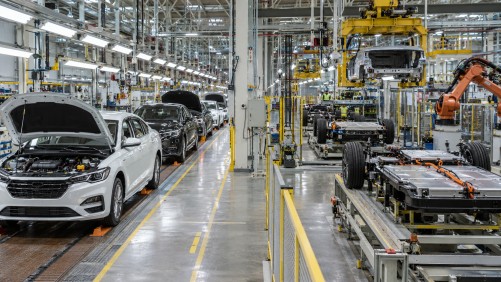
Nissan is scaling back its petrol vehicle production in China as the automotive market increasingly pivots towards electric and hybrid vehicles. The Japanese automaker is responding to a faster-than-anticipated shift in consumer demand within the world’s largest automotive market, where electric vehicle sales are surging.
The company has adjusted its annual sales forecast to a range between 2.97 million and 3 million vehicles, down from the previous estimate of 3.15 million vehicles. This revision reflects weaker demand and growing competition within China, a market where Nissan experienced a significant 32% drop in sales over the first nine months of the year.
Nissan CEO Ivan Espinosa noted the rapid transition towards electric and new-energy vehicles, acknowledging the substantial challenges it poses for the company. In response, Nissan plans to reduce local production of petrol cars, enhance its export strategies, and expand its lineup of battery-powered and plug-in hybrid vehicles under its N series.
The competitive landscape in China is intensifying, with local electric vehicle manufacturers benefiting from government support and aggressive pricing strategies. This has put additional pressure on established automakers like Nissan to adapt their production strategies to remain competitive.
Despite these challenges in China, Nissan has recorded stronger sales in Japan and North America, where the shift towards electric vehicles has been more gradual. This contrast highlights the varied pace of electric vehicle adoption across different global markets.
The developments underscore the strategic adjustments global automakers must make as they navigate the evolving demand for cleaner vehicles. Traditional manufacturers are being compelled to innovate and compete against rapidly advancing Chinese brands, which are reshaping the future of the automotive industry.